Welcome Home
Tech Lead's Postmortem
Introduction
As Tech Lead for this project, my primary responsibility was overseeing the technical development and ensuring coordination between the programming team and design team. This report aims to provide a structured postmortem analysis of my contributions and experiences during the period of this project regarding my role. The game we developed was a PS1-styled horror game inspired by the movie Midsommar, whereas in our game a close friend invites the protagonist to a community in the woods. The people there treat them well, whereas the reality of the situation becomes more dire the longer the player stays. They learn the truth about this peculiar community by collecting clues and interacting with members of this village which progresses the story, and finally unearthing their true intentions and secrets. Our team aimed to create an immersive environment with a focus on the narrative, which is driven around giving the player clues hidden throughout the game and designing the experience to reward the player for their curiosity and taking the less obvious options.
My role consisted primarily of technical decision-making and maintaining tools and processes that enabled the team's productivity, allowing the programmers to focus on implementing features by having a streamlined workflow cycle. I have encountered numerous moments where the frameworks and technical aspects that I have tried to contribute to our project made a positive impact, but of course with that come times where the consequences were either instantaneous or only became apparent further down the development road.
What went right
One of the key successes I experienced was implementing a reliable production pipeline. This included setting up version control using Git and GitHub, using GitHub actions for automating builds, and using Kanban boards in GitHub projects to keep an overview of features and bugs that needed to be dealt with.
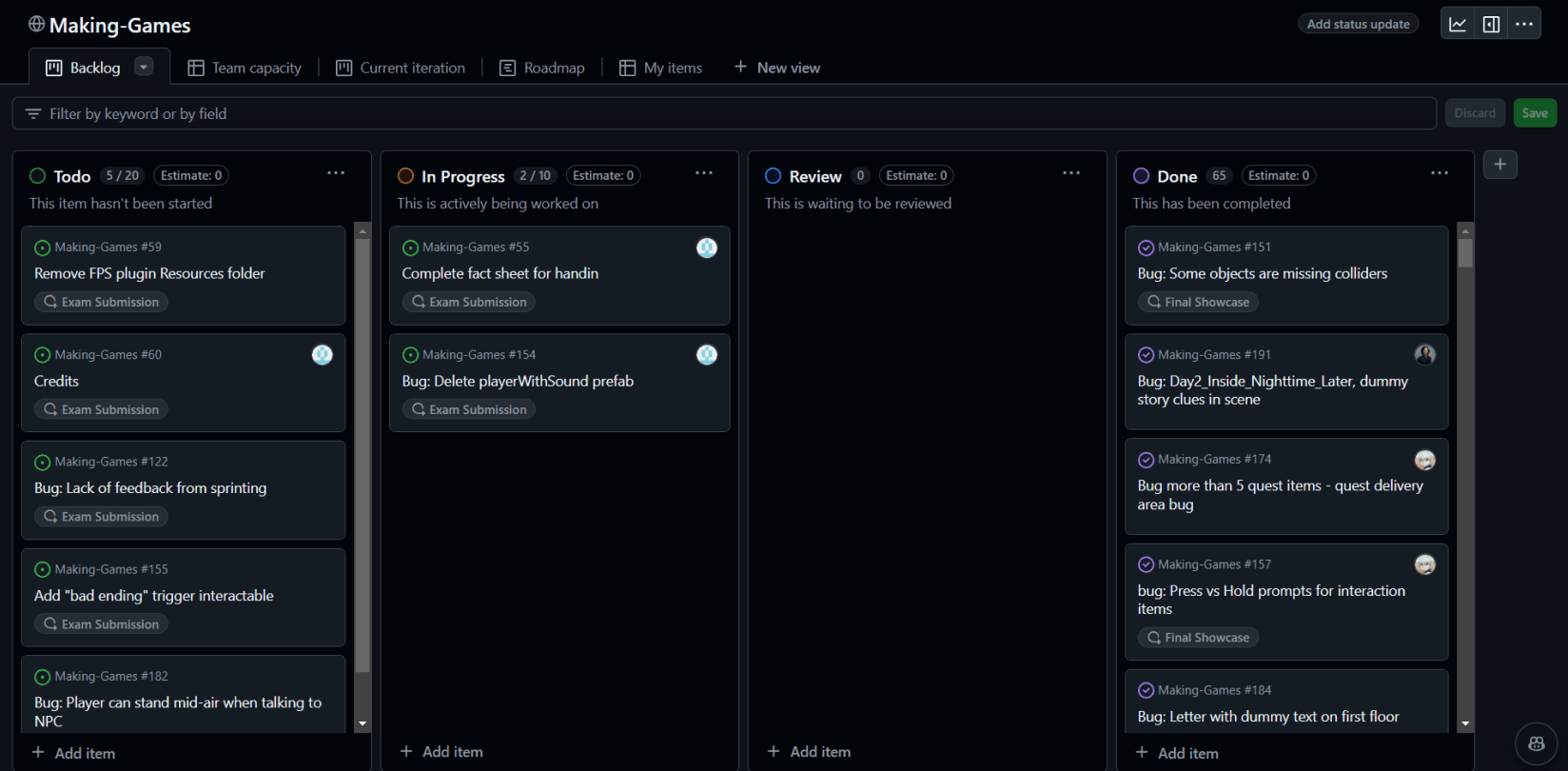
These tools minimized conflicts by having concise issues that specified requirements for a task, minimizing the risk of misinterpreting each other and creating excess work. This also improved workflow efficiency by automation in how the repository is structured, all of which ensured a smooth iteration cycle.
Unity Workflow
When working with Unity, my initial goal was to guide the team in using prefabs, which proved to be essential in preventing conflicts and maintaining project consistency. This began by defining naming conventions and a folder structure for the project in general but also for prefabs, ensuring they are organized logically. In our game, we had a lot of NPCs that all shared general characteristics and some had specific behaviors. This was circumvented by using prefab variants to handle differences between similar objects, avoiding duplication of code and wasted hours of work.
GitHub Guideline
To ensure consistency in GitHub, I established clear guidelines for branch naming, commit messages, and pull request practices. For example, I adopted a naming convention for branches that reflected the specific issue that was being worked on, which GitHub could leverage by creating a branch directly out from an issue. I also enforced descriptive, atomic commit messages that follow a consistent format (e.g., Add new animation system). Use code review requirements before allowing a pull request to go through, thus enforcing standards, and catching inconsistencies before merging. Additionally, I included a README.md file that outlines the coding conventions, repository structure, and workflow expectations, creating a unified framework for collaboration that all team members could access and adhere to.
Issue Templates
GitHub issue templates have been a powerful tool for streamlining communication and task management in our game development process. They ensured clarity by providing structured fields to describe tasks, such as an overview, user story, and acceptance criteria. This reduces ambiguity, enabling all team members, both designers and developers to understand the task requirements clearly.
Using templates has fostered a smoother collaboration in our team, especially in teams such as ours with diverse roles and different levels of experience in games. Standardized formats such as these help integrate technical and non-technical workflows, as seen supported by the GitHub guidelines and task management practices detailed in our GitHub Repository.
An example scenario could, for instance, be if the development team is tasked with implementing a double-jump feature for the game, the issue template used correctly would look like this:
- Title: Add Double-Jump Mechanic
- Overview: Enable the player to jump a second time while in the air.
- User Story: As a player, I want to jump twice so I can navigate complex levels.
- Acceptance Criteria:
- Player leaves the ground upon pressing the jump button.
- A second jump is triggered if the jump button is pressed mid-air.
- The player can only double-jump once before landing.
- Full task description: Pictures, relevant material, or more text.
Game Build and Distribution
Game Builds were created when a pull request was merged with the state of the game, enabling the UX lead to easily acquire the newest version of our game for testing and feedback purposes.
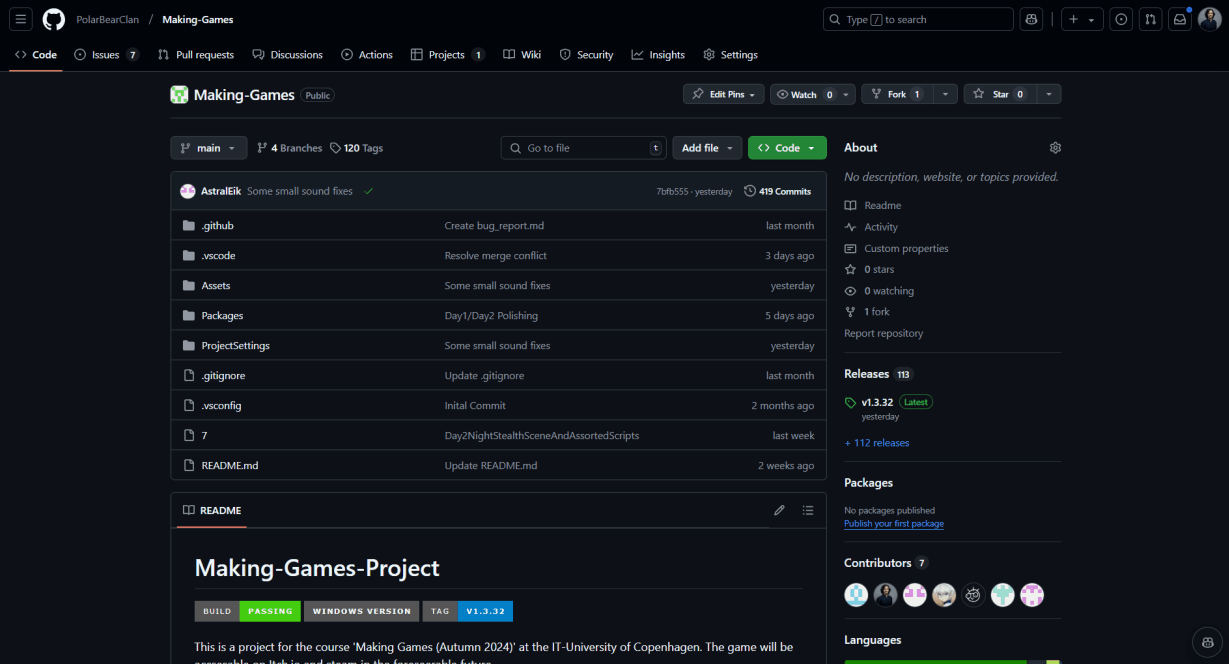
Packaging and distributing the game for the target platform (e.g., PC) was a smooth process thanks to a robust CI/CD setup which was also supported by having an automatic semantic versioning tagger that affected how releases were named and made, giving the possibility to revert if irreversible events were to happen to the game.
What went wrong
Guidelines Misaligned with Project Workflow
While establishing guidelines is crucial for maintaining project coherence, the ones implemented were not fully aligned with our team's actual workflow. For instance, our workflow for versioning the game did not align with the guidelines that I found online. This misalignment arose because the guidelines I found were generally for software management and did not match with a small-scale game development life cycle as ours, this should also have been discussed and considered using input from all team members, highlighting a lack of early collaboration during the planning phase.
Lack of Enforcement on Conventions
Even when guidelines were in place, there was insufficient enforcement of these conventions. Team members occasionally ignored branch naming rules or made undocumented changes to shared assets, such as scripts and scene layouts in Unity.
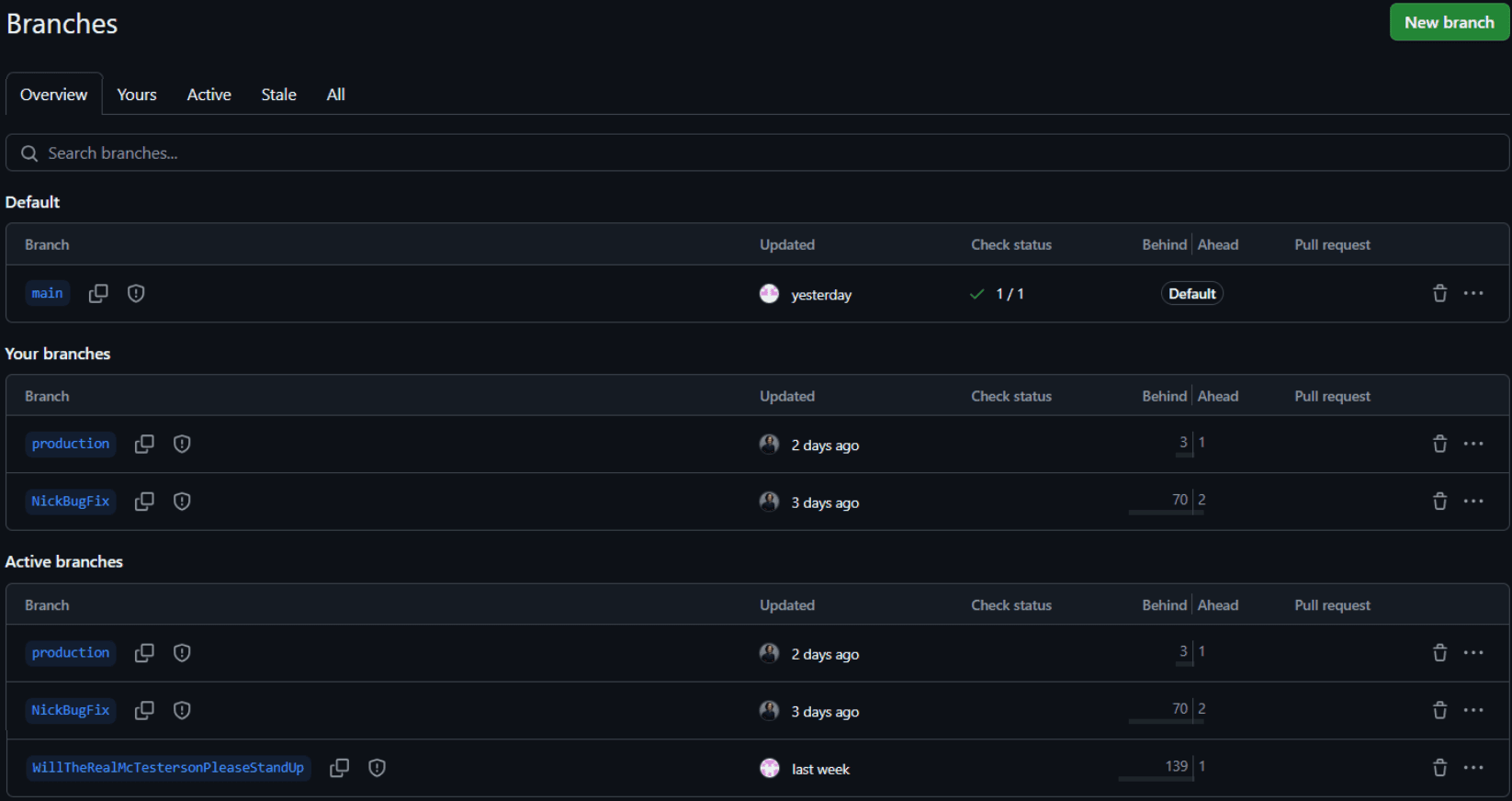
This escalated slowly throughout the project, causing these deviations to accumulate, leading to merge conflicts and a lack of cohesion in the project's structure. This inconsistency created bottlenecks during integration phases, costing valuable time in the later part of the project. When reflecting on the experience, I realize that I should voice my concerns more clearly and be brave to take action when I notice the moments these things occur, to ensure that everybody stays on the same page.
Delayed Integration of Design Team
The design team's involvement in the GitHub workflow was initiated later in the project, which caused significant disruptions in development. Early stages lacked coordination between the design and technical teams, resulting in implications in how to use Git when pushing changes to the project, GitHub when managing branches and avoiding bad branching, and Unity when using the editor and resources that the programmers have created. This could be easily avoided by getting the designers properly integrated into the workflow, perhaps in the way of doing a workshop on how to use these tools.
Summary & Takeaways
As the Tech Lead, my role centered on managing the project's technical direction, ensuring streamlined workflows, and enabling collaboration between programming and design teams. Key accomplishments included setting up an effective production pipeline, establishing structured Unity workflows, enforcing GitHub practices, and implementing an automated build process for easy distribution and packaging for the game. These efforts facilitated consistent progress and efficient task management. However, challenges such as misaligned 5 guidelines, inconsistent adherence to conventions, and delayed onboarding of the design team members highlighted areas for improvement in team coordination and process enforcement.
This project underscored the critical need for aligning technical practices with the team's workflows and project scope. The importance of early collaboration and training, particularly for integrating team members who were not familiar with Unity and GitHub, became evident. Effective enforcement of standards and proactive communication were essential for maintaining cohesion throughout our development, even when it became hard to balance between room for fun and staying focused on the tasks at hand. I strived to become a good Tech Lead who balances adaptability and structure, attempting to ensure that the technical solutions I came up with would support both the team's needs and the project's goals.
What I learned
Serving as Tech Lead for this project provided invaluable insights into the dynamics of technical leadership within a collaborative game development environment. My role started out being unfamiliar to me and some of the resources given to me from the course didn't give me all the answers I sought. Still, throughout the project I learned that it required balancing technical execution with team coordination, ensuring that workflows supported efficient progress while fostering collaboration between members of the team. Through trying to implement a production pipeline, defining some Unity standards, and trying to enforce GitHub practices, I was able to create a decent development process and maintain a certain level of consistency across the project, not to mention all the valuable insights I've gained along the way.
This experience also illuminated areas for future growth. I entered this project without much prior knowledge of how to collaborate in a cross-functional team, this also includes the different processes that usually occur in game development which we have been taught but never worked with in practice before. When looking back I realize that having an understanding of your role is necessary, but knowing the inner workings of the other roles that consist in the game development team can lead to a clearer insight into the strengths and weaknesses of each specific team, making it easier to steer a team to success and avoiding unnecessary bumps along the way.
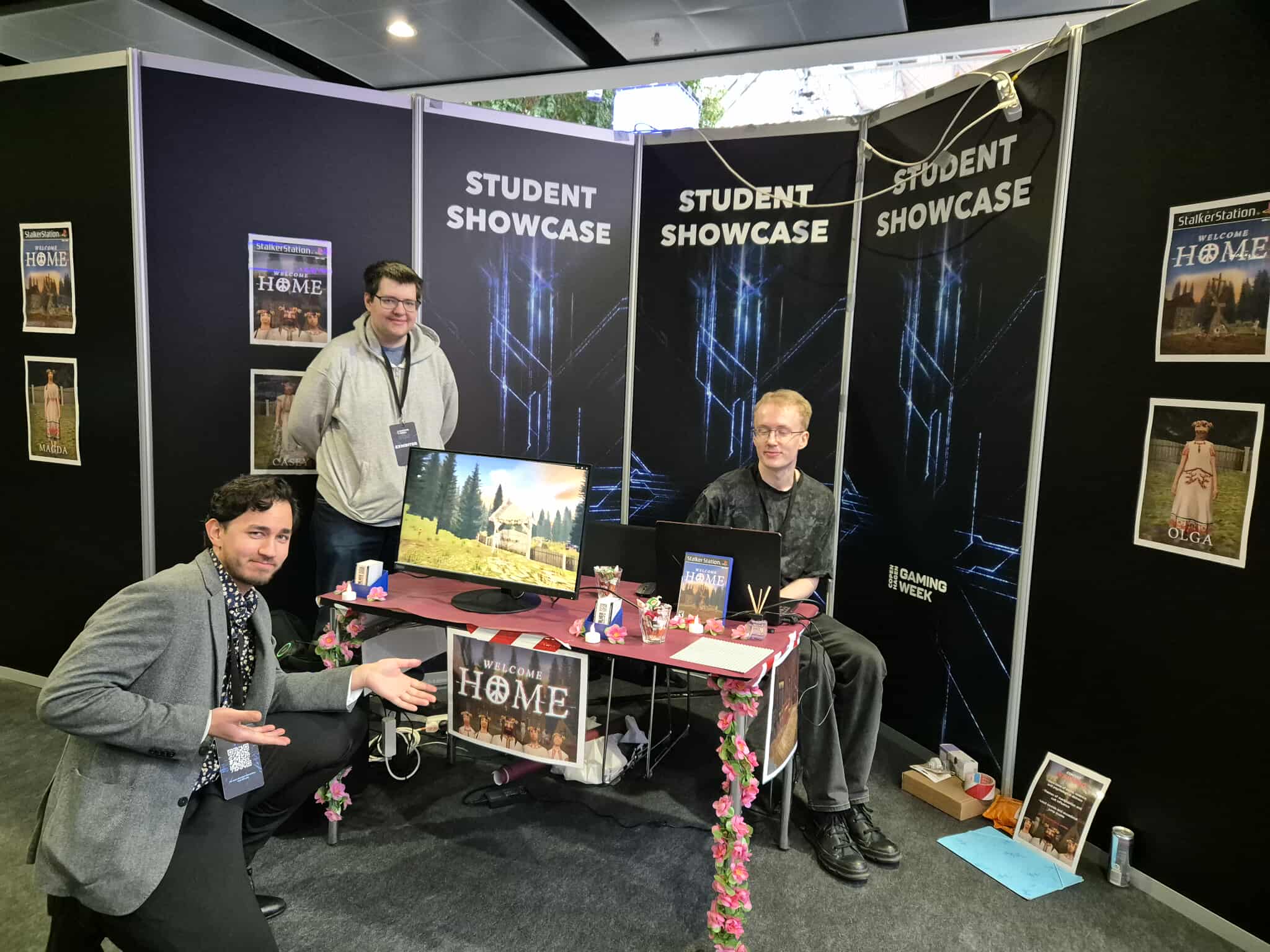
A snapshot out of our journey (It's me on the left corner). It's been a thrilling journey to share, the game I helped develop reached 30,000 downloads on Itch.io! Seeing our game, "Welcome Home" make it to the front page of Itch.io among a million other cool games is a moment I'll never forget. It is bewildering to see people on YouTube experience your game. Still, it is also bittersweet when people encounter flaws and bugs while playing, making you want to pull your teeth out and squash those bugs immediately... This has shaped the way I perceive development in games and how you invest parts of yourself in a media consumed by others, which every developer should be proud of regardless! It's been exciting to learn about the post-production phase of games, especially publishing to Steam and learning the Steam API/Steam workshop. We also attended a student showcase for "Tommorows Awesome Game Showcase" (TAGS), where I meet other passionate developers, exchanged valuable experiences, and enjoyed the aftermath of many weeks of hard labor with other students' games.